
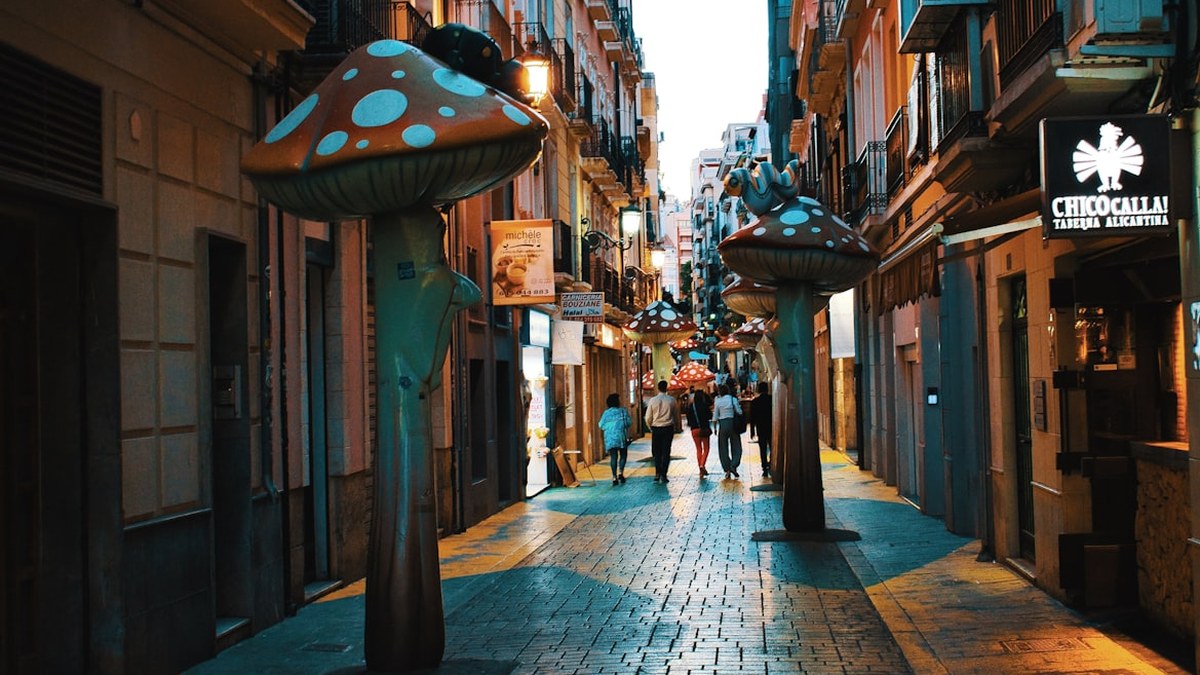
One walk can give you enough material for multiple poems if you collect details with intention.
The key is to draft from different angles rather than trying to say everything at once.
This guide shows how to turn a single place into three distinct poems you can revise later.
Place is generous. It offers sound, light, texture, movement, and small human traces that carry story without needing explanation. When you walk with a poet’s attention, you collect more than scenery; you collect choices.
The problem is that writers often try to fit an entire place into one poem. That can lead to a crowded draft that explains too much. A better approach is to take one walk and write three poems, each with a narrower lens.
Set up the walk like a field session
Pick a route you can repeat. Familiarity is helpful because it allows deeper noticing. Bring a phone note or a small notebook. Decide that you are collecting, not composing. Composition comes later.
As you walk, record details in short phrases. Avoid full sentences. Capture what you would miss if you hurried: a smell near a doorway, the angle of weeds at a curb, the way a bird changes the air.
Collect three types of detail
You want variety so each poem can lean on different material. Here are three categories that tend to produce strong drafts:
- Physical facts: colour, temperature, texture, shadows, movement.
- Living presence: animals, insects, people glimpsed, sounds of work.
- Human trace: a lost glove, a sign, a fence repair, a painted number.
If you want an example of how a living presence can carry emotional weight without being explained, reread Marsh Deer and notice how restraint lets the image do the work.
Poem 1: the image poem
This poem is built from physical facts. Choose one dominant image from the walk: a flooded ditch, a shopping trolley in reeds, sun on brick, a line of pollen on water. Write a draft that stays close to the senses. Keep interpretation light. Let the reader stand where you stood.
A useful trick is to write in present tense and avoid abstract words. Replace “beautiful” with what makes it beautiful. Replace “sad” with what makes it sad. The poem becomes a camera that chooses where to point.
Poem 2: the character poem
This poem is not a biography. It’s a glimpse of a person, animal, or even an implied speaker who belongs to the place. Choose one figure you saw or imagined: a man sweeping a shop front, a child dragging a stick, a fox slipping behind bins, a woman waiting for a bus with a heavy bag.
Write the poem in second person or third person to create distance. Give the figure one action and one object. Keep the poem small and specific. The place is the stage, but the figure is the motion.
If you want a model of quiet pressure and controlled tone, spend time with Coiled Silence and listen for where the poem tightens its focus.
Poem 3: the reflection poem (without explaining)
Reflection poems often fail when they lecture. The goal is reflection that is earned by the images. Choose a moment on the walk when your attention shifted – something made you pause, look twice, or think of another time. Draft a poem that includes the moment, then adds a turn.
The turn is where reflection belongs. It can be one line that changes the angle, a question left open, or a comparison that lands softly. Keep it honest and unshowy.
Drafting method: write three short drafts, not one long one
Set a timer for 10–15 minutes per poem. Draft quickly and stop. Do not combine them. The point is to create three separate containers. Later, you can decide which one wants to grow.
When you return to revise, look for what each poem is truly about. Often it is smaller than you think: a sound, a gesture, a particular kind of light. Protect that core and cut what distracts.
Revision moves that keep the place alive
When you revise place-based poems, you are managing distance. Too close and it becomes a list. Too far and it becomes vague. These moves help keep it balanced:
- Swap abstract nouns for concrete objects: “loss” becomes “the empty hook”.
- Use one repeating detail: a colour, a sound, a direction of wind.
- Cut the explaining line: trust the image to carry meaning.
- Sharpen verbs: let the place move and act, not just sit there.
Sharing the work as a next step
Place poems often come alive when read aloud because sound carries environment. If you have access to a reading series or a friendly audience, consider sharing one of the drafts. The response can reveal what landed.
For a reminder that poems can have a public life in a warm setting, Piccolo Spoleto Sundown Poetry Series is a good touchstone.
Keep the route and repeat it
The real payoff comes when you repeat the walk in different weather and different seasons. The place becomes a collaborator. You start noticing patterns, then breaks in the pattern. That tension is fertile.
One walk can give you three poems. Ten walks can give you a sequence. The habit is simple: collect details, draft from distinct angles, revise with restraint. Over time, you’ll build a body of work that feels rooted and real because it began with your feet on the ground.